Rangoli has a funny way of making a place feel festive almost instantly. You can have the simplest entrance, add a few colours to the floor, and suddenly the whole space looks different.
That is the charm of rangoli.
You don’t need to be an expert artist or spend half a day creating a complicated masterpiece. A thoughtful design, a handful of beautiful colours and a little patience can be more than enough. Whether you’re preparing for Diwali, Navratri, Pongal, a family celebration or simply want to brighten your home, there are plenty of rangoli ideas that are easy to create and still look impressive.
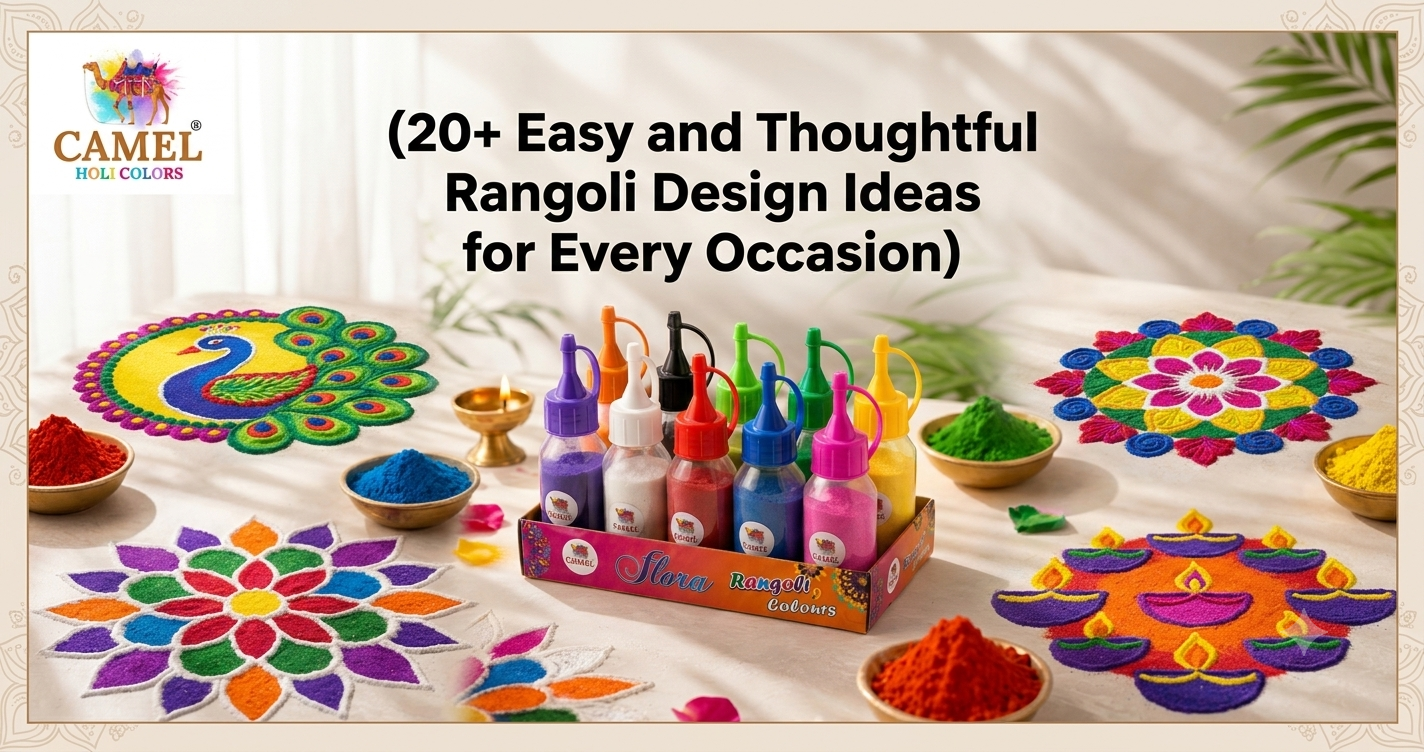
So, if you’re looking for inspiration, here are 20+ easy rangoli design ideas that you can try at home.
1. Simple Floral Rangoli
When in doubt, start with flowers.
Draw a large flower in the centre and fill each petal with a different shade. Add a contrasting outline around the petals and finish the design with a few small dots.
It’s simple, traditional and works beautifully near the entrance.
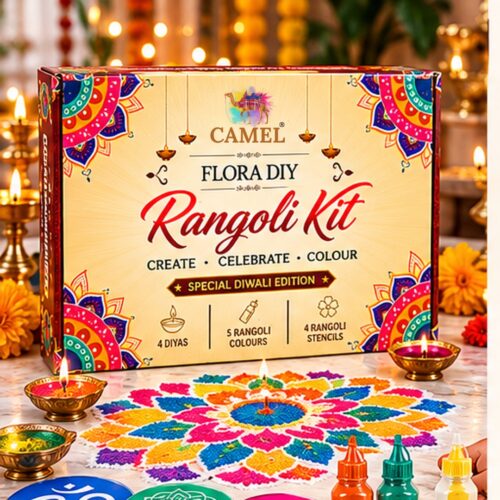
2. Diya Rangoli for Diwali
A diya-themed rangoli is almost impossible to get wrong during Diwali.
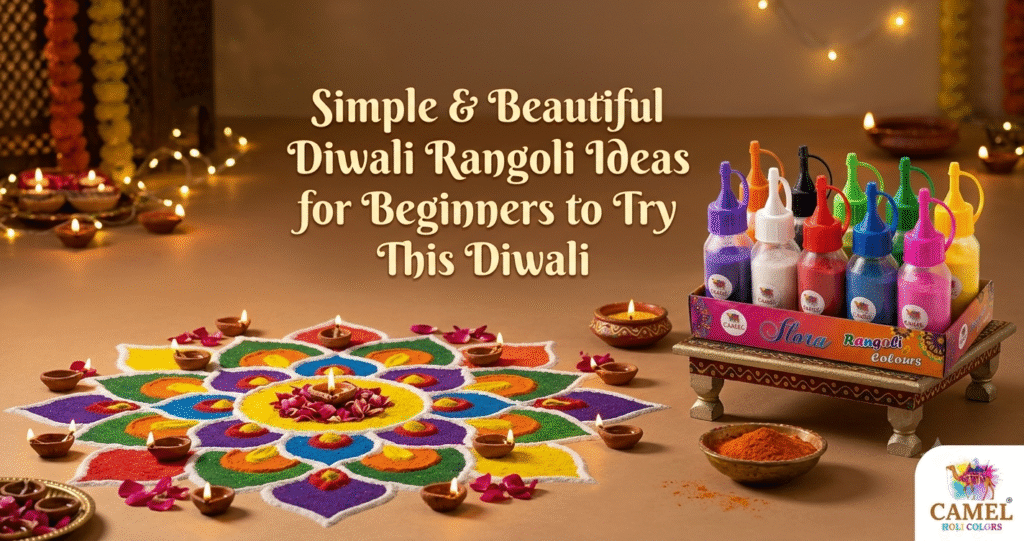
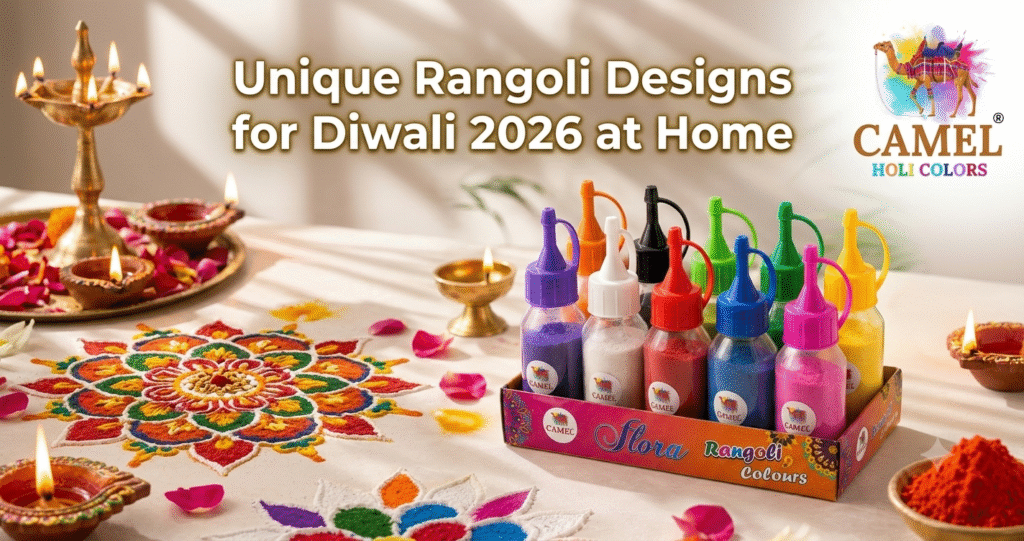
Create a few traditional diyas in the centre and surround them with colourful petals, leaves and decorative borders. Once you place real diyas around the design, the whole arrangement comes alive in the evening.
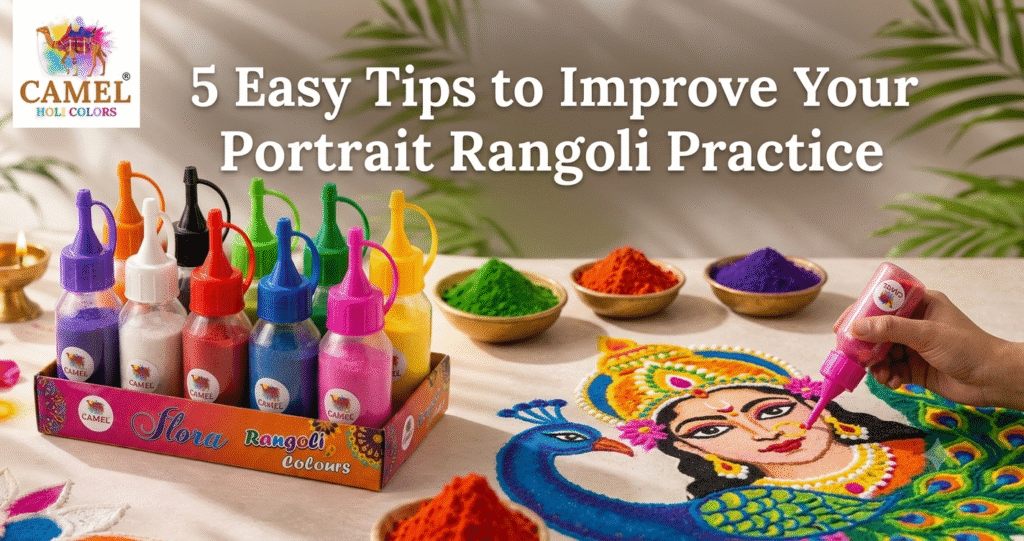
3. Peacock Rangoli
Peacock designs are a favourite for a reason. They give you plenty of room to play with colours.
Use blue and green for the body, add colourful feathers and finish with small decorative dots. You can make a detailed peacock if you’re comfortable with rangoli, or simplify the shape for a beginner-friendly version.
4. Lotus Rangoli
The lotus is another beautiful traditional motif.
Start with a central lotus and build smaller petals around it. Pink, red, yellow and white work particularly well, although there is no hard-and-fast rule.
Want something more contemporary? Try using two shades of the same colour instead.
5. Geometric Rangoli
Not comfortable drawing flowers or birds? No problem.
Go geometric.
Squares, circles, triangles, diamonds and repeating lines can create a surprisingly attractive rangoli. The trick is to keep the spacing consistent. Once the basic structure is ready, fill each section with contrasting rangoli colors.
6. Dot Rangoli
Dot-based rangoli is a great place for beginners to start.
Arrange small dots in rows and then connect them using curved lines. You can create flowers, leaves, stars or symmetrical patterns from the same basic structure.
It looks complicated from a distance, but once you understand the pattern, it’s quite manageable.
7. Small Doorstep Rangoli
You don’t always need a giant design.
A small rangoli placed directly outside the main door can look neat and elegant. Try a circular floral pattern with four or five colours, then add a simple border around it.
This is especially useful when you have limited space.
8. Rangoli with Diyas and Flowers
Here’s an easy way to make a basic rangoli look more festive.
Create a simple circular pattern and place small diyas or fresh flowers around the edges. Marigolds work particularly well because their bright colour naturally complements traditional rangoli designs.
Sometimes, the surrounding decoration matters just as much as the pattern itself.
9. Mandala-Inspired Rangoli
Mandala patterns are excellent if you enjoy symmetry.
Begin with a small circle and gradually work outward using petals, curves, dots and geometric shapes. Keep repeating the pattern around the centre.
Take your time here. Rushing the first few circles can throw the entire design off balance.
10. Leaf and Vine Rangoli
For something slightly different, skip the large central motif and create a flowing arrangement of leaves and vines.
Green can form the main structure, while pink, yellow or orange flowers add contrast. This style looks particularly nice along a doorway or around a larger floor decoration.
11. Four-Corner Rangoli
This design is perfect for square or rectangular spaces.
Create a small motif in each corner and connect the four sections with borders, dots or curved patterns. Leave some empty space in the centre for a clean, modern appearance.
It doesn’t have to fill every inch of the floor.
12. Rainbow Rangoli
Why choose just two or three shades when you can use a whole rainbow?
Arrange colours gradually from one shade to another, creating a circular or wave-like pattern. This is especially fun for children and family activities.
Just make sure the colours are separated clearly enough so the design doesn’t become visually crowded.
13. Minimalist White and Colour Rangoli
Sometimes less really is more.
Use white powder to create the outline and add just two or three bright colours inside the design. The contrast creates a clean, sophisticated look without requiring a complicated pattern.
This is a particularly good option for smaller entrances.
14. Ganesh Rangoli
For religious celebrations and special occasions, a Ganesh-inspired rangoli can create a meaningful focal point.
If you’re new to rangoli, don’t attempt an extremely detailed portrait straight away. Instead, use a simple Ganesh silhouette surrounded by flowers, diyas or traditional patterns.
Keep the central figure clear and let the surrounding design do the decorative work.
15. Star Rangoli
A star-shaped design is quick, colourful and versatile.
Create a large star in the middle and surround it with small flowers or circular patterns. You can use five, six or eight points depending on the look you want.
Bright contrasting shades make this design stand out.
16. Spiral Rangoli
Spiral patterns are easy to customise.
Start from the centre and slowly work your way outward, creating curved lines. Add coloured sections between the curves and finish with small dots around the outside.
It has a modern feel while still looking festive.
17. Traditional Border Rangoli
Not every rangoli needs a central picture.
Create a long decorative border using repeated flowers, leaves, dots and geometric shapes. This works particularly well along balconies, hallways, entrances and the edges of larger decorations.
It’s also a good choice when you want to decorate a wider area without covering the entire floor.
18. Flower Petal Rangoli
If you have fresh flowers at home, try combining petals with coloured powder.
Use rangoli powder for the basic outline and fill selected sections with flower petals. Marigold, rose and other colourful petals can add natural texture to the design.
The result feels festive without looking overly artificial.
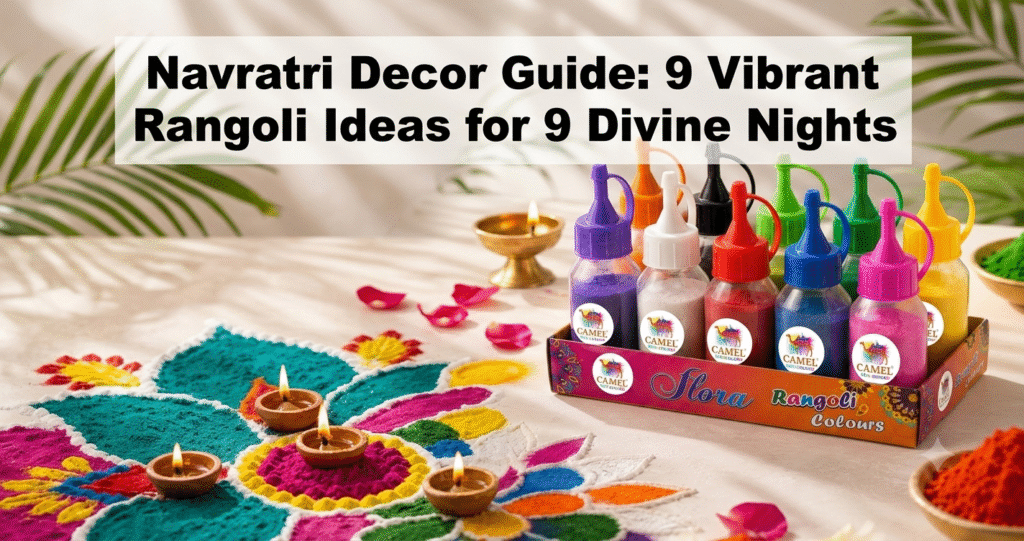
19. Navratri-Inspired Rangoli
For Navratri, you can create designs around traditional motifs, flowers and symmetrical patterns.
Use vibrant shades and consider incorporating a diya or lotus into the centre. A circular arrangement works particularly well because it naturally draws attention toward the middle.
20. Diwali Crackle-Pattern Rangoli
Want something different?
Try a crackle or burst pattern. Start with a central circle and draw sharp lines moving outward, almost like rays of light. Fill alternate sections with different colours.
Add tiny dots along the edges and place diyas around the design.
Simple. Festive. Effective.
21. Personalised Name Rangoli
Here’s one that can make a celebration feel a little more personal.
Create a basic floral or geometric rangoli and include a person’s name or initials in the centre. It can work beautifully for birthdays, anniversaries, weddings or family celebrations.
Just keep the lettering large enough to remain readable.
Choosing the Right Rangoli Powder
A beautiful design starts with the right material. If the powder is too coarse or difficult to control, even a simple pattern can become frustrating.
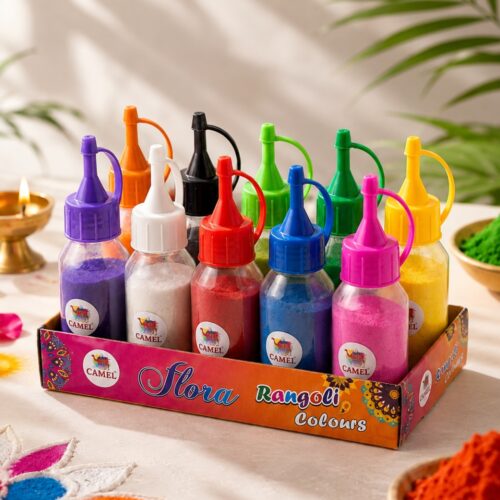
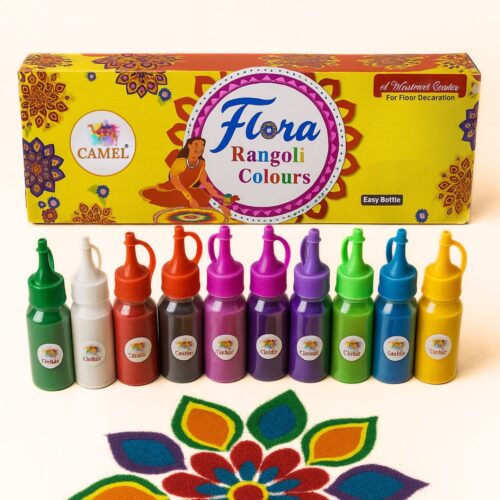
Look for a rangoli powder that feels easy to spread and gives you good colour coverage. Your choice may also depend on the size of the design you’re planning.
For everyday home decoration, smaller packs with several shades can be convenient. For large celebrations, events or commercial decoration, buying larger quantities may make more sense.
People searching for rangoli powder wholesale india should also compare pack sizes, available shades, consistency, packaging and supplier terms instead of looking at price alone.
How Much Does Rangoli Colour Cost?
The festival rangoli color price can vary depending on the quantity, number of shades, packaging and product type. A small multi-colour pack will naturally have a different price from a larger professional or wholesale pack.
Before buying, think about the actual size of your design. There is little point buying a huge quantity for a tiny doorstep rangoli, and the opposite can be equally inconvenient.
Can You Buy Rangoli Powder Online?
Absolutely. For people who don’t have access to a nearby festival-products store, it’s convenient to buy rangoli powder online and compare different packs from home.
When shopping online, check the product description carefully. Look at the colour options, quantity, intended use and customer feedback where available.
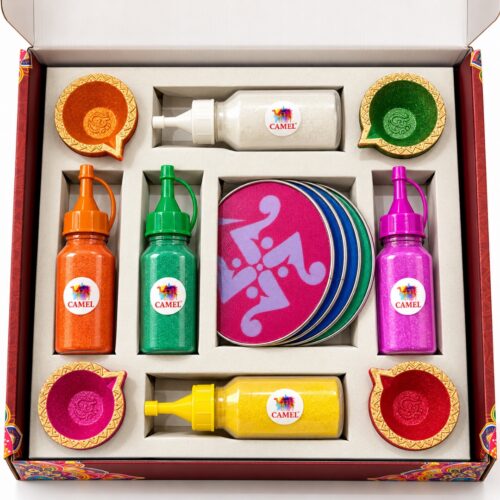
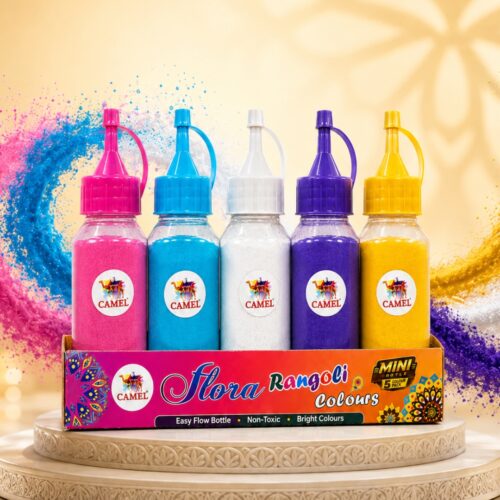
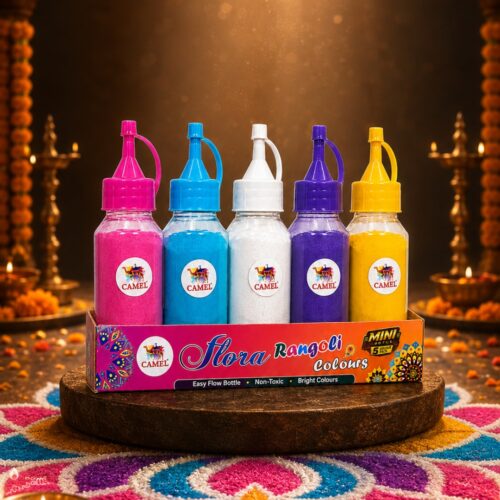
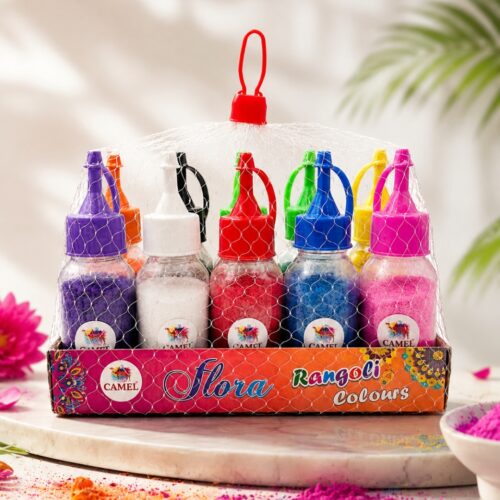
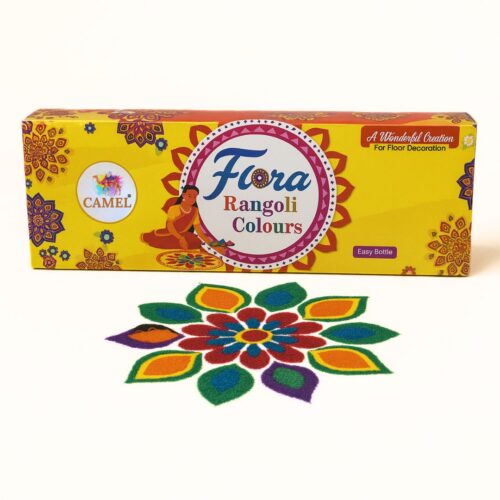
Brands such as Camel offer rangoli colour products designed for festive decoration, giving shoppers another option when planning their seasonal designs.
Finding a Suitable Rangoli Powder Brand
The phrase best rangoli powder brand can mean different things to different people. A beginner might care most about easy handling and a useful selection of colours. An event decorator may be more concerned with quantity and consistency.
So don’t get too caught up in finding one universal “best” option.
Choose according to your project.
A Few Tips for Better-Looking Rangoli
Before you start, clean and dry the floor properly. A dusty surface can make the powder difficult to control.
If you’re creating a symmetrical design, mark the centre first. For larger patterns, you can lightly sketch the basic outline before filling it with colour.
And here’s a small trick that makes a big difference: don’t use every colour you own just because you have it.
Three or four well-matched shades can sometimes look far better than ten colours competing for attention.
For beginners, start small. Once you become comfortable controlling the powder, move on to larger and more detailed patterns.
Most importantly, don’t worry if the first attempt isn’t perfect.
Rangoli isn’t supposed to feel like an exam.
It’s an art form meant to be enjoyed.
Final Thoughts
From a tiny floral design outside your door to a large festival arrangement filled with flowers and diyas, rangoli offers endless possibilities. You can keep it traditional, experiment with modern patterns or create something completely your own.
The best part? Every design carries a little bit of the person who made it.
So pick your colours, clear a little space, and start with the first line. Maybe you’ll create a simple flower. Maybe you’ll end up making something far more elaborate than you planned.
That’s the fun of rangoli. You never quite know where a few colours and a little imagination will take you.